If you are looking at small multi-unit property opportunities in Green River, the first thing to know is simple: this is not a volume market. Green River is a very small town, which means the right parcel, the right zoning, and a realistic operating plan matter more here than they might in a larger Utah market. If you want to invest with fewer surprises, this guide will help you understand what to look for, what to question, and where small multi-unit ideas may fit best. Let’s dive in.
Why Green River requires a careful approach
Green River is a compact market with 847 residents, 362 housing units, and 297 households, according to the U.S. Census Bureau profile for the city. That small base can shape everything from vacancy risk to unit mix to how quickly a property may lease. In a market this size, even one or two empty units can have a meaningful impact on returns.
That does not mean opportunity is off the table. It means you need to focus on practical fundamentals like parking, maintenance, occupancy, and a property layout that fits local demand. In Green River, steady performance is often more important than chasing aggressive growth assumptions.
There is also a visitor-oriented side to the town. Green River State Park sits within city limits and just off Interstate 70, and the park serves as a put-in for Labyrinth and Stillwater canyon trips while also offering camping and a nine-hole golf course. That setting can make certain properties worth a closer look for mixed-use or visitor-serving strategies, but it is not a substitute for zoning and licensing review.
Start with zoning first
In Green River, zoning is the main filter for any small multi-unit idea. The city code states that the official zone map is the final authority, and where boundaries are unclear, lot lines, streets, and alleys are used to interpret them. In other words, the exact parcel matters more than a broad description of the area.
If you are evaluating duplex, triplex, apartment, or mixed-use potential, zoning should be one of your first checks, not one of your last. A property that looks promising on paper can become much more complicated if the parcel sits in a zone with tighter use limits or conditional approvals.
What R-1 means
The R-1 zone is described as primarily suited for one- or two-family dwellings and quiet residential conditions. Its permitted uses include single-family dwellings. If your plan depends on a higher-density format, R-1 may not be the first place to focus.
Why R-3 matters for multi-unit ideas
The R-3 zone is the clearest place to start for small multi-unit opportunities. The code describes R-3 as a residential environment with a variety of dwellings, higher traffic, and a denser setting where high-density units are more feasible.
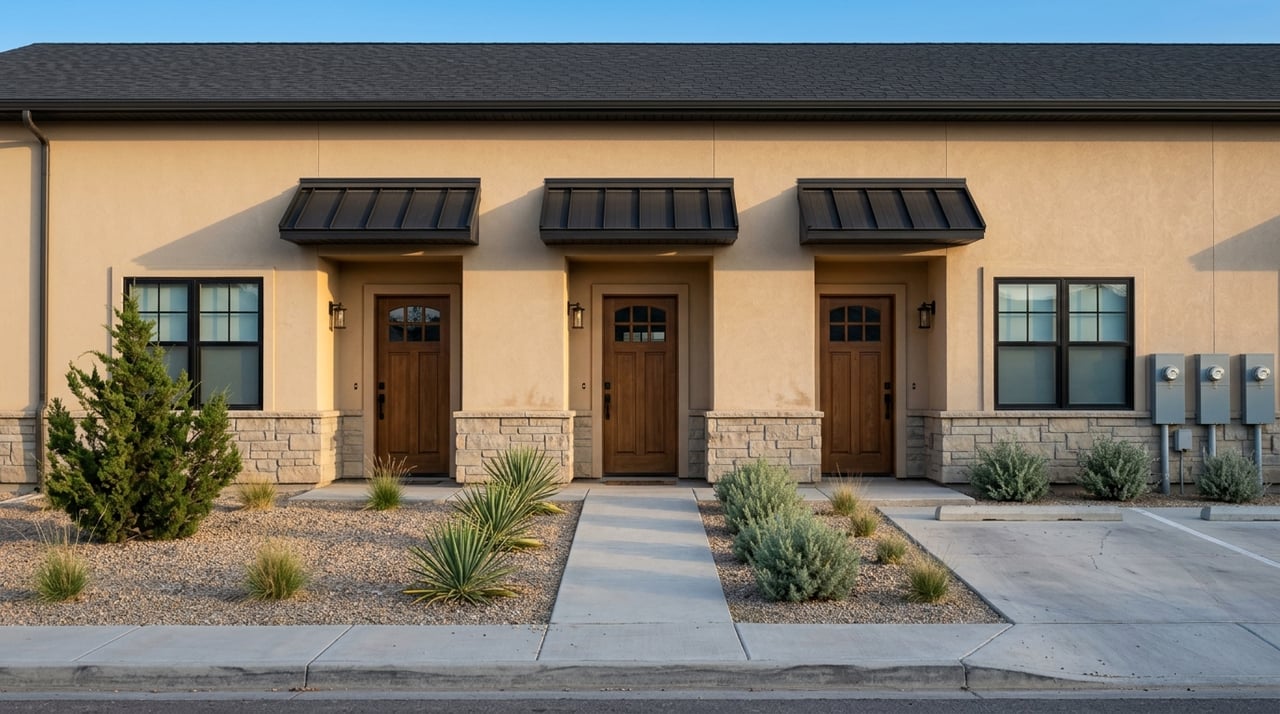
Its permitted uses include apartments, condominiums, single-family dwellings, townhomes, and two-family dwellings. For buyers or investors thinking about duplex or small apartment-style layouts, that makes R-3 the most obvious zone to investigate first.
Commercial parcels may allow housing
Some commercial parcels can support residential units, but the path is more conditional. In Green River’s C-1 and C-2 zones, residential units are allowed only conditionally in situations where mixed-use building design standards apply and where R-3 development standards apply.
That can create opportunity for the right building or redevelopment plan. It also means you should not assume that every commercial parcel can easily become a multi-unit residential play.
Mixed-use and adaptive reuse are worth watching
Green River’s planning discussions suggest that redevelopment and adaptive reuse are active local themes. In March 2025 planning commission minutes, the city discussed its current zoning structure and noted a possible need for a mixed-use or commercial-residential zone, especially in light of motel conversions.
That discussion does not change the code by itself. Still, it is a useful signal if you are considering a property that may need a more flexible use case, especially along commercial corridors or in buildings with existing nonresidential characteristics.
For investors, this can mean two things at once. There may be creative opportunity in the market, but there is also a need for patience and parcel-level due diligence.
Location inside town can change the deal
In a small town, micro-location matters. A property near the river corridor may raise different questions than a parcel in a straightforward residential area or along a commercial stretch.
If a site is near the river, floodplain, or undeveloped edge of town, extra caution is warranted. Green River’s OS-1 open-space zone is intended for areas where development should be limited or excluded, including places such as riverbeds, floodplains, or undeveloped land where public utilities have not been extended.
The city’s flood-control rules also exist to restrict or regulate development in areas vulnerable to flood or erosion hazards and to control changes to floodplains and stream channels. If a property depends on river-adjacent appeal, flood and zoning review should be part of your first screening process.
Residential areas
A purely residential parcel may be easier to evaluate for long-term rental use. If the parcel is in the right zone, you may have a cleaner path for a simple long-term hold strategy.
Commercial corridors
A commercial-corridor property may offer flexibility for mixed-use or upper-story residential concepts. But because residential use in C-1 and C-2 is conditional, the timeline and approval path may be less straightforward.
River-edge and undeveloped parcels
These parcels may look appealing at first glance, but they can carry more constraints. Open-space limits, utility questions, and flood-related rules can change the cost and feasibility of a project quickly.
How to think about returns in Green River
In Green River, return potential is likely to come from disciplined operations more than rapid appreciation or fast rent growth. With fewer than 1,000 residents and a limited housing base, stable occupancy and conservative assumptions matter.
That means a modest unit count may be easier to manage than a larger plan that depends on constant turnover. It also means practical features like off-street parking, durable finishes, and a straightforward layout may matter more than luxury upgrades.
For many buyers, the strongest strategy may be to underwrite carefully and keep expectations grounded in the realities of a small market. If your numbers only work under best-case assumptions, that is a sign to slow down.
Long-term versus short-term use
Some Green River properties may look attractive for visitor stays because of the city’s access to Interstate 70 and Green River State Park. But if your strategy depends on stays under 30 days, you need to evaluate that use separately.
Green River defines a nightly or short-term rental as occupancy for fewer than 30 consecutive days. The city requires a valid nightly-rental license before operating, and each property needs its own license.
The code also requires off-street parking on the same lot, compliance with building, health, and fire codes, smoke and carbon-monoxide detectors, tax remittance, and a one-hour complaint-response standard. In a small market, those rules can have a major effect on whether a short-stay strategy is practical.
For some buyers, that may still be a good fit. For others, a long-term rental plan may offer a simpler path with fewer operating layers.
Questions to ask before you buy
A small multi-unit property can look compelling until one overlooked detail changes the whole picture. Before you move forward, make sure you are asking focused questions about the parcel, the code, and the business plan.
Parcel and zoning questions
- Is the parcel on the official zone map in R-3, or in a commercial zone where residential use is conditional?
- Does the intended layout match the standards for the actual zone on the lot?
- If the property is near the river corridor, floodplain, or undeveloped edge of town, what OS-1 or flood-control constraints apply?
Operating questions
- If the plan includes stays under 30 days, can the property meet Green River’s nightly-rental licensing and parking requirements?
- Does the unit mix fit a small local market, or does it assume more demand than the town can reasonably support?
- Are maintenance, parking, and vacancy assumptions realistic for a town with a limited tenant pool?
Underwriting questions
- If the property is mixed-use, does the deal still work if the residential side leases more slowly than expected?
- Are your projections conservative enough for a market with 297 households?
- Are you buying based on actual zoning and use potential, rather than an idea that may require future code changes?
What opportunity looks like here
Green River is best viewed as a small, code-sensitive market rather than a broad multifamily play. The better opportunities are likely to come from carefully chosen parcels, modest unit counts, and a strategy that matches the property’s actual zoning and location.
That can still create real upside for the right buyer. If you stay disciplined, focus on fit rather than scale, and verify the rules early, small multi-unit properties in Green River can be worth serious consideration.
If you want help evaluating Green River property opportunities, zoning fit, or investment strategy in southeastern Utah, the Blake Walker Group can help you identify options and think through the details with a local perspective.
FAQs
What makes Green River different for small multi-unit investing?
- Green River is a very small market with 847 residents, 362 housing units, and 297 households, so vacancy, unit count, and operating discipline can have a bigger impact than in larger towns.
Which Green River zoning district is most relevant for duplex or small apartment ideas?
- R-3 is the key zone to investigate first because the code allows apartments, condominiums, townhomes, two-family dwellings, and single-family dwellings there.
Can commercial property in Green River include residential units?
- Yes, but in C-1 and C-2 zones residential units are allowed conditionally, not automatically, and mixed-use design standards and R-3 development standards may apply.
Do Green River river-adjacent parcels need extra review?
- Yes, parcels near the river corridor or undeveloped edges of town may involve OS-1 open-space limits, flood-control rules, utility questions, or other development constraints.
What are the Green River rules for short-term rentals?
- Stays under 30 consecutive days require a valid nightly-rental license, and each property must meet rules related to off-street parking, detectors, code compliance, tax remittance, and complaint response.
Is Green River a good market for aggressive multifamily growth assumptions?
- The research suggests a more conservative approach is wiser because Green River has a limited population and housing base, so stable occupancy and realistic projections are especially important.