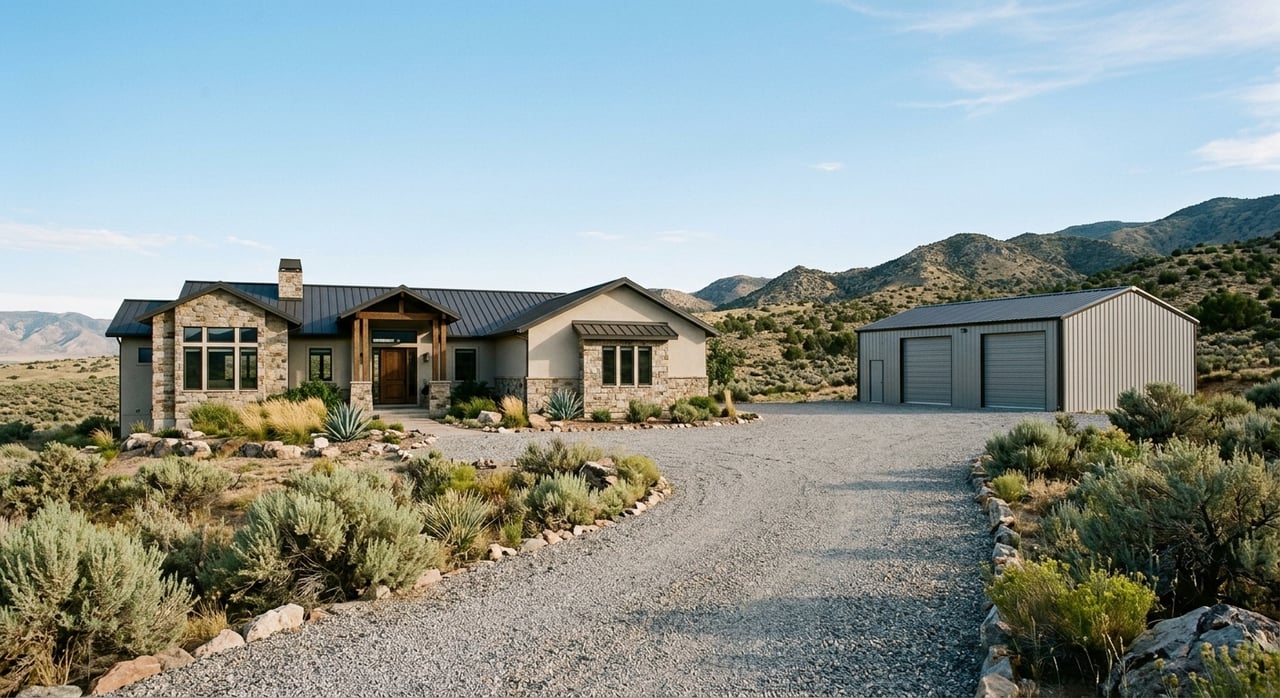
Dreaming about a home with room to spread out near Monticello? Acreage can open up possibilities for privacy, outbuildings, animals, equipment storage, and wide-open views, but it also comes with details that matter more than they do on an in-town lot. If you are thinking about buying land with a home near Monticello, understanding access, utilities, zoning, and seasonal conditions can help you avoid surprises and buy with confidence. Let’s dive in.
Why acreage near Monticello is different
A home on acreage near Monticello does not work exactly like a home on a standard city lot. One of the first things to confirm is whether the property is inside Monticello city limits or in unincorporated San Juan County.
That distinction affects which rules and services apply. Inside city limits, Monticello City Public Works manages water, sewer, trash, streets, curb and gutter, stormwater, and sidewalks. The city also requires a building permit before construction begins, including before moving a trailer or pre-built home onto a lot.
Outside town, county rules often shape how the property can be used and improved. In unincorporated areas, San Juan County’s zoning map is the final authority for zoning, and county land-use, road, fire, and health requirements can play a much bigger role in your decision.
Start with zoning and land use
When you buy acreage, it helps to think beyond the house itself. You may be picturing a barn, a detached shop, RV storage, fencing, a garage, or space for agricultural use, but those ideas need to fit the property’s zoning.
San Juan County’s land-use materials separate residential and agricultural priorities. In residential zones, accessory buildings are reviewed in light of the zone’s main purpose for homes. In agricultural zones, agricultural and rural uses take priority.
That can affect how useful a property really is for your plans. It is smart to verify the official zone early, then compare your intended use with the county’s standards before you get too far into the process.
Why accessory buildings matter
On acreage, outbuildings are often a major part of the purchase decision. San Juan County’s materials show that accessory structures are subject to zone-specific placement rules, setback standards, and lot-coverage limits.
In practical terms, that means a shop, barn, garage, corral, or trailer area may not be allowed exactly where you imagined. Because accessory buildings count toward total lot coverage, it is worth confirming those limits before closing rather than after.
Access and roads deserve extra attention
Road access can make or break an acreage purchase. A property may look straightforward on a listing, but access conditions can vary widely across unincorporated areas of San Juan County.
The San Juan County Road Department maintains roads in unincorporated areas and handles grading, chip sealing, snow removal, and ditch and flood-channel maintenance. The department reports responsibility for 1,610 miles of dirt roads, 745 miles of gravel roads, and 371 miles of paved roads, which shows just how different one parcel’s access may be from another.
For new construction, the county requires a scaled lot plan that shows lot dimensions and existing or proposed buildings. If road frontage is unimproved or boundaries are unclear, the county may require a certified survey of the property and the road or right-of-way.
For some nonconforming lots, legal access also has to be on a road built to county standards before a building permit can be issued. That makes access more than a convenience issue. It can affect what you are allowed to do with the property.
Questions to ask about access
Before you buy, consider asking:
- Is the property on a paved, gravel, or dirt road?
- Is the road county-maintained or privately maintained?
- Does the parcel have recorded legal access or an easement?
- Are the boundaries and right-of-way lines clear?
- Will a survey be needed before future improvements?
Water and wastewater can shape the deal
For many acreage buyers, utilities are the biggest unknown. Near Monticello, a property may be served by public water or sewer, or it may rely on private systems depending on location.
San Juan County’s land-use materials state that if part of a proposed development is within an approved public water or sanitary sewer service area, the applicant must get written certification from the provider. Private wells and septic systems are considered only when the parcel is outside the service area of an approved public system that can serve it.
This matters whether you are buying an existing home or planning future improvements. If a property depends on a private well or septic system, you will want to understand the records, condition, and permitting status early in your due diligence.
Private well and septic checks
San Juan Public Health certifies private wells, provides private water chemistry testing, and inspects and permits septic wastewater systems in the county. If the property uses private systems, those records can be as important as the home inspection.
If irrigation water or a private well is part of the appeal, water rights are a separate issue worth checking. Utah’s Division of Water Rights administers the measurement, appropriation, apportionment, and distribution of Utah water resources, so any water-right questions should be reviewed directly and not assumed.
Fencing, fire policy, and practical land use
Acreage often comes with plans for fencing, livestock, equipment, or future structures. Those uses can be possible, but they still need to fit local rules.
San Juan County has a fencing ordinance, and its land-use materials also note sight-triangle limits on corner lots. So even a straightforward fence plan may need to account for visibility and right-of-way requirements.
Fire considerations also matter in unincorporated areas. The county says its fire policy for approved development and construction applies to private and county-owned land in unincorporated areas, and the fire chief can update the policy based on conditions like drought, wind patterns, remoteness, and other fire-risk factors.
That is especially important if you are buying land farther from town. A property’s setting can be part of its appeal, but remoteness can also affect development planning and ongoing maintenance.
Seasonal conditions are part of ownership
It is easy to tour acreage on a clear day and picture only the best-case version of access and upkeep. In this part of San Juan County, seasonal conditions deserve a closer look.
County building-code information lists a frost depth of 36 inches across the county and 42 inches in mountain areas. It also lists a wind load of 115 mph exposure C, and says ground snow-load values are determined by entering the property location into the Utah Ground Snow Load Map.
For you as a buyer, that means foundations, driveways, outbuildings, and utility lines should be evaluated with year-round conditions in mind. Summer access and winter access may feel very different, especially on larger parcels or roads outside town.
Seasonal questions worth asking
A few practical questions can help you think ahead:
- How is the driveway maintained in winter?
- Does the road drift, wash, or become difficult after storms?
- Were the home and outbuildings designed for local frost depth and wind conditions?
- If you plan to build, what site work may be needed for utilities and drainage?
A smart acreage due diligence checklist
Buying a home with acreage near Monticello often goes more smoothly when you verify the basics early. A strong due diligence plan can save time, money, and frustration later.
Here is a simple checklist to bring into your home search:
- Confirm whether the property is inside Monticello city limits or in unincorporated San Juan County
- Verify the official zoning classification on the county map
- Ask whether the parcel is inside a public water or sewer service area
- Review private well and septic records if the property uses them
- Confirm legal access, road type, and maintenance responsibility
- Ask whether a survey is needed for boundaries or right-of-way clarity
- Check setback, lot coverage, and accessory-building rules
- Review fence, fire-policy, and water-right questions if they apply to your plans
- Consider winter conditions for roads, utilities, and future building projects
Why local guidance matters
Acreage purchases near Monticello can be rewarding, but they usually involve more moving parts than a standard in-town sale. The right property is not just about square footage or views. It is also about whether the land supports the way you want to live and use it.
That is where local knowledge matters. When you work with a team that understands southeastern Utah land, zoning, and rural-property considerations, you can ask better questions, spot issues earlier, and move forward with more confidence.
If you are exploring homes with acreage near Monticello, the Blake Walker Group can help you evaluate land use, access, utilities, and the details that matter before you buy.
FAQs
What should you check before buying acreage near Monticello, Utah?
- Confirm whether the property is in Monticello city limits or unincorporated San Juan County, then verify zoning, access, utility service, and any limits on outbuildings or fencing.
How do zoning rules affect homes with acreage in San Juan County?
- San Juan County uses zone-specific rules that can affect accessory buildings, setbacks, lot coverage, and whether residential or agricultural uses are prioritized.
Do acreage properties near Monticello always have public water and sewer?
- No. Some properties may be in approved public service areas, while others may rely on private wells and septic systems depending on location.
Why is road access important when buying rural property near Monticello?
- Access can affect daily use, seasonal travel, and future building plans, and some lots may need county-standard road access before a building permit can be issued.
What agency handles private well and septic records in San Juan County, Utah?
- San Juan Public Health certifies private wells, offers private water chemistry testing, and inspects and permits septic wastewater systems in the county.
Can you add a barn or shop to acreage near Monticello, Utah?
- Possibly, but you should verify the property’s zoning, setback rules, and lot-coverage limits first because accessory buildings are regulated by zone in San Juan County.